

SAILING YACHTS – BOAT REVIEWS
The philosophy of BOAT REVIEW is simple yet ambitious: to tell the story of the sea in its purest essence, conveying to readers the real emotions and sensations experienced on board.
Our sailing yacht tests go far beyond a general description of the boat, offering an immersive experience that allows readers to feel as if they were actually on board, perceiving every movement, every detail, and every reaction of the yacht as it interacts with wind and sea.
The Sailing Yachts section features an extensive catalogue of reviews dedicated exclusively to this specific category of vessels, all produced by our team of professional journalists and testers. Dimensions, construction features, sail plan configuration, and the hull’s dynamic behaviour are analysed in depth and placed into context, going well beyond the basic technical specifications provided by the shipyards.
Sailing Yachts: tests and video reviews
The tests are available in both written and video formats, allowing readers to directly observe how each yacht behaves in different operating conditions while also gaining deeper insight into key aspects such as helm balance, response to sail trim adjustments, ease of handling, crew protection, and onboard livability under way.
Every day, our journalists travel to ports and marinas all over the world to carry out sailing yacht tests on some of the finest models offered by the most established and renowned shipyards in today’s yachting scene. This approach ensures that readers are constantly kept up to date on market offerings, design developments, and the most significant trends in the sailing sector, both for cruising yachts and performance-oriented boats.
Thanks to our sailing yacht tests, readers can compare different models, understand their differences in terms of performance, comfort, and handling, and evaluate which yacht best suits their needs and sailing style. This approach is particularly valuable for those considering the purchase of a boat, as it supports more informed and well-reasoned decisions based on our testers’ direct experience and on concrete data collected at sea, rather than relying solely on promotional material or technical data sheets which, as we well know, are often overly simplified or even misleading.
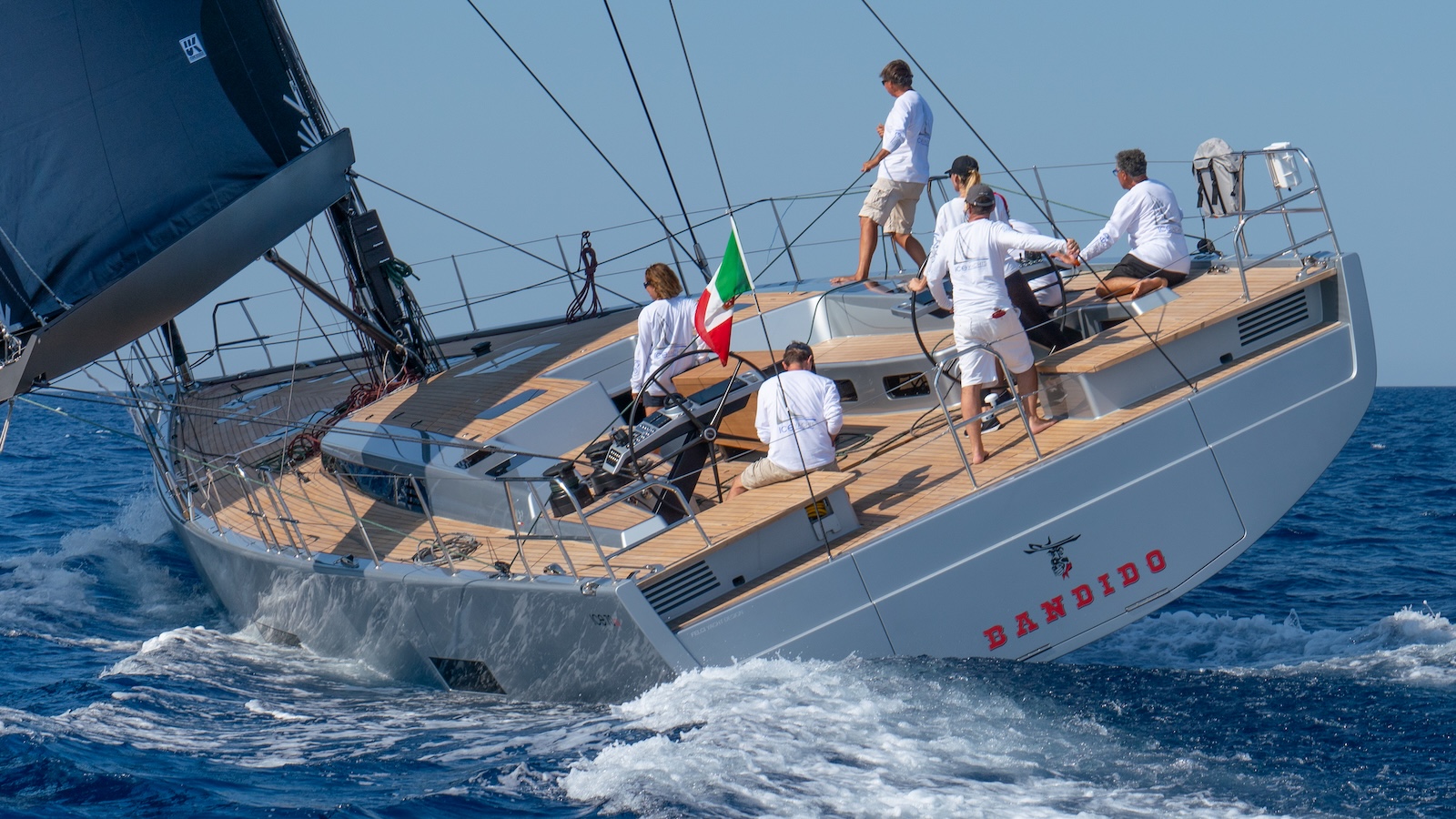
Deep Analysis for a perfect sailing yachts review
The starting point of Boat Review’s sailing yacht tests is usually an in-depth analysis of deck and onboard equipment, the distribution of interior and exterior spaces, structural and finishing materials, and the construction and design solutions adopted by the shipyard. Special attention is given to deck configuration, side deck design, beam width, and the continuity of walkable surfaces, as well as to cockpit layout, assessing protection, drainage, ergonomics, and functionality both under sail and at anchor.
Readers are guided through every area of the yacht, from bow to stern, with a detailed examination of the running and standing rigging layout, the sizing and lead of sheets, halyards, and reefing lines, the quality of winches, clutches, and traveller tracks, as well as the logic behind the management of controls from the helm stations. Particular focus is placed on helm ergonomics, visibility of the sail plan, and accessibility of controls, all essential elements for sailing both with a full crew and short-handed.
The analysis continues with an evaluation of the mast, sail plan, appendages, and load-bearing structure, considering materials, sections, load points, and integration with the hull. Below deck, layouts, volumes, headroom, storage capacity, and the functionality of cabins, saloon, bathrooms, and technical areas are examined, with special attention to the engine room, onboard systems, weight distribution, and insulation quality.
Through a precise and technical narrative, the journalist provides readers with a clear perception of build quality and attention to detail: from the solidity of handholds to the rigidity of structural elements, from the finish of teak or composite surfaces to the ergonomic coherence of every deck and interior component. This approach makes it possible to understand how every design and construction choice contributes to the yacht’s overall behaviour under sail and to its long-term usability.
The language used in our sailing yacht tests is technically sound and well structured, while remaining easily accessible even to those taking their very first steps into the world of sailing. Technical terms that are often difficult or unclear on other platforms are clearly explained by our journalists, ensuring an informative experience that is accessible to everyone.
Sailing Yachts
This is followed by the sea trial itself – the true core of our work – aimed at assessing the hull characteristics of sailing yachts and their ability to react to a wide range of weather and sea conditions. Yes, because it would be far too easy to test a sailing boat in perfect conditions, with flat seas, steady wind, and no variation.
At The International Yachting Media, however, we want to tell the story of the sea in its most authentic form: alive, unpredictable, ever-changing, and often challenging.
For this reason, sailing yachts are evaluated in different and not always easy conditions: hard on the wind with strong breeze, fast reaches, demanding broad reaches, and cross seas that put stability and safety to the test. Each encounter with the waves becomes a valuable opportunity to understand how the boat reacts, how agile it is in manoeuvres, and how effectively it ensures comfort and protection for the crew.
Aspects such as steering precision, overall balance, behaviour in gusts, the effectiveness of appendages, and ease of handling even with a reduced crew are carefully observed and reported.
In our sailing yacht tests, our journalists document every manoeuvre, describing how the hull glides through the water, how the helm responds to each correction, how the sails react to adjustments, and how onboard comfort is maintained even in the most demanding conditions, while always sharing with readers the more subtle sensations as well: the thrill of speed, the lightness felt when planing, but also the reassuring solidity of every handhold, the comfort of the cockpit, and the safety of the side decks.
Each sailing boat has its own character and distinctive traits: some respond quickly and nimbly, others require more careful handling, while others still combine speed and stability in a surprising way. Thanks to our sailing yacht tests, readers can directly compare differences between hulls and layouts, understand whether a boat is better suited to a more sporty or more relaxed sailing style, which models offer greater agility, safety, and ease of handling, and which achieve the best balance between performance and comfort.
This allows those considering a purchase to weigh their choice in a more informed and conscious manner, while curious readers and enthusiasts can deepen their knowledge and satisfy their curiosity.
The Sailing Yacht Tests section, therefore, is not just a collection of technical reviews: it is a comprehensive tool for anyone who wants to understand sailing from every angle. It helps future owners evaluate practical choices and allows both curious readers and experienced sailors to expand their knowledge of the nautical world.
Our video tests are also featured on The International Yachting Media YouTube channel, which has become an essential reference point for boating enthusiasts, with nearly 200,000 subscribers.
The videos allow viewers to see the boats in action, from harbour manoeuvres to open-sea sailing, and complete the reading experience by offering an exclusive visual perspective.